
Recurring drain calls usually have a pattern. A kitchen line in Farmington gets snaked. Water flows great for a few weeks. Then it slows down again. Same sink, same smell, same frustration.
When we put a camera in a line like that, we usually find the same thing: grease, soap film, and mineral scale coating the pipe wall. The snake punched a hole through the blockage. It did not clean the pipe.
That's the job hydro jetting was built for.
What Hydro Jetting Actually Is
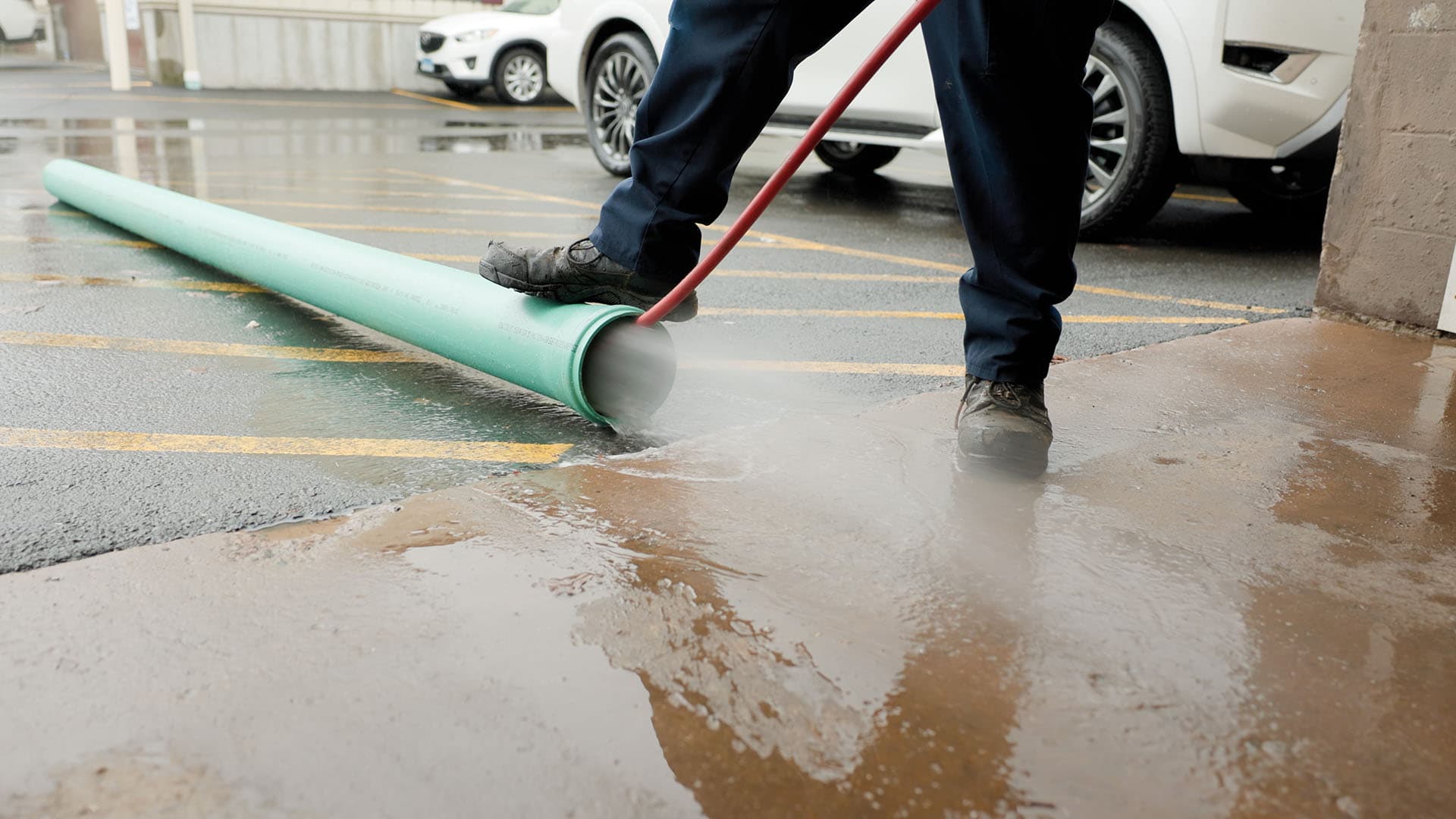
A specialized nozzle on a high-pressure hose sends water through the line at 3,000 to 4,000 PSI. The nozzle sprays forward to break obstructions and backward to pull itself through the pipe while scrubbing the walls clean. It is basically a pressure washer for the inside of your plumbing.
The result isn't a hole through the buildup. It's a pipe restored to full diameter, with the walls scoured clean.
Why Snaking Isn't Enough (Sometimes)
A drain snake is a great tool. We use them constantly. They punch through blockages fast and get water moving again. For a one-time clog from something that fell down the drain, a snake is the right call.
But a snake doesn't clean the pipe. It clears a path. The sticky layer that caused the clog to form stays on the pipe walls, ready to trap the next round of grease, hair, or soap scum.
Hydro jetting removes the layer. That's the difference.
What Builds Up Inside Pipes
- Kitchen lines: Grease, food residue, starch films. Builds up faster in older homes with cast iron drains that have a rougher interior surface.
- Bathroom lines: Soap scum, hair, mineral deposits from hard water. If you're on well water around Torrington or Danbury, mineral scale is a real factor.
- Main sewer lines: Root intrusions (small hair-like roots that infiltrate pipe joints), organic sludge, sand and silt.
- Commercial kitchens: Everything above, but ten times faster. Restaurants in downtown Hartford and New Haven are on regular hydro jetting schedules.
Is It Safe for Your Pipes?
Used correctly, yes. We always start with a camera inspection before jetting. The camera tells us:
- What material the pipe is (PVC, cast iron, copper, clay)
- Whether there are cracks, collapses, or bellies in the line
- Exactly what's causing the problem and where
For fragile pipes, collapsed sections, or severely corroded cast iron, we'll recommend a gentler approach or a repair. For most residential systems built after the 1960s, hydro jetting is safe and effective. It uses only water -- no chemicals.
The Process, Start to Finish
- Camera inspection to see what we're dealing with and confirm the pipe can handle pressure
- Access through a cleanout fitting or, if needed, through a fixture opening
- Measured jetting that works through the line section by section, scrubbing the full circumference
- Final camera pass to verify the line is clear and open
The Farmington job took about 90 minutes. The homeowner watched the before-and-after camera footage. She said the before looked like the inside of a clogged artery. The after looked like new pipe.
When We Recommend It
- Recurring clogs in the same line (the biggest indicator)
- Slow drainage throughout the house, suggesting main line buildup
- Before pipe lining or certain repairs, so the liner bonds to a clean surface
- Grease-heavy commercial kitchens on a maintenance schedule
- Older homes where decades of buildup have narrowed the effective pipe diameter
The Long Game
Most customers who get a full hydro jetting do not call us back for the same line for a long time. The buildup is gone, not just pushed aside.
If your drains are slow or the same clog keeps returning, it might be time to stop snaking and start cleaning. Call us at 860-614-7157 to schedule a camera inspection. We'll show you exactly what's in the pipe and whether jetting is the right fix.